
Announcements

Published: 7 January 2026 by Missie Hall
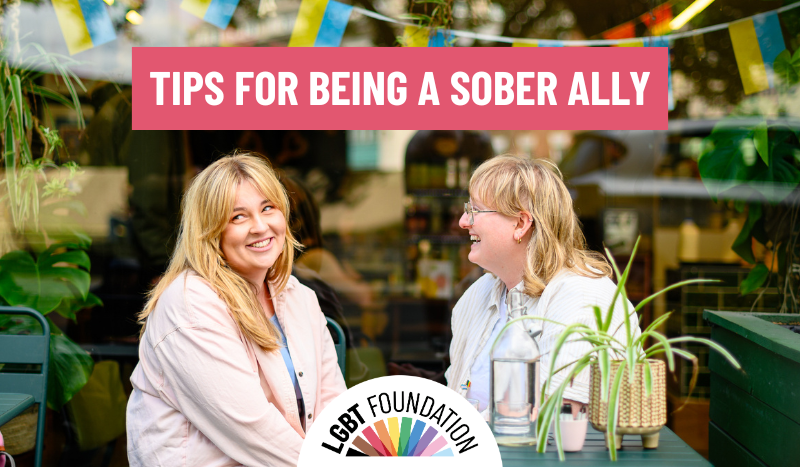
January has a funny way of nudging us all to think about making changes to our lifestyles. Some of us join gyms, others pick up new hobbies. But for many people, January becomes a moment to rethink their relationship with alcohol or other substances.
That might mean cutting down, going alcohol free for the month, or starting a longer-term shift. Hence the rise of ‘Dry Jan’ or for some, ‘Dry(ish) Jan’. However it looks and whatever the goal, those choices deserve support from the people around them.
That is where allyship comes in.
A sober (or dry) ally is someone who supports, understands, and respects these changes without judgement, pressure, or awkward comments. So, this January, the team at LGBT Foundation have pulled together some simple but powerful ways you can be a sober ally this month and beyond.
It’s Not a One Size Fits All Approach
There’s no single “correct” way to make changes. Some people might go for complete abstinence, others might opt for cutting down, and some may simply want to save drinking for the weekends. There’s no right or wrong way to do it. As an ally, your role is to support, respect, uplift, and champion them, whatever their version looks like.
There is also no single “right” reason for wanting to change habits either. For some it’s about health. For others it’s money, mental wellbeing, medication, or simply wanting more control. Every reason is valid and every choice deserves support.
This journey is unique to everyone, and it is going to look a little different for each person.
Mix Up the Routine
If your friendship has always revolved around nights out in bars or clubs, that’s great and for some people, that might not need to change. For others, it might mean switching things up a bit.
Why not try something new together?
Even small things, like checking whether a venue has decent alcohol-free options, can make someone feel considered and included.
Let Them Set the Pace
Some people are comfortable being around alcohol. Others aren’t. Some want to talk openly about their journey. Others prefer to keep it private.
Listen. Follow their lead. Respect the boundaries they set and remember those boundaries might shift over time. Flexibility is a huge part of allyship!
Hold Off on the Pressure
“Go on, just one won’t hurt” might sound harmless, but it can genuinely undermine someone’s progress. The same goes for jokes that treat drinking as the default, or comments that hint at sobriety being boring.
Respect a simple “no thanks” without follow up questions. A good ally removes pressure – they don’t add to it.
Celebrate the Wins
A week. A month. A year. Milestones matter when you are making a change, and they feel even better when the people you love celebrate them with you. If someone wants to mark a win, join them. Cheer them on. Champion your friends in the same way you would want to be championed.
Have Their Back
Being an ally sometimes means stepping in.
If someone questions, mocks, or dismisses your friend’s choice not to drink, speak up. A simple “they’re good, thanks” or “we’re not doing that” can make all the difference.
You can also show support by:
Don’t Take It Personally
Someone changing their relationship with alcohol isn’t a judgement on you, your choices, or your friendship. It’s their journey!
If it inspires you to explore some mindful drinking too, brilliant. If not, that’s also great.
Normalise It
Choosing not to drink isn’t radical. It doesn’t mean they no longer want to have fun, their definition of what is ‘fun’ to them might simply be changing. And that can be an exciting chance to explore new ways of enjoying time together.
Why This Matters
Being a sober ally is about respect, empathy, and community. Our LGBTQIA+ spaces are strongest when everyone feels supported, whether they’re raising a glass or choosing not to.
Together, we can create spaces where sober and dry choices are celebrated, and where every member of our community feels respected and included.
Other Resources:
Great Podcasts to Listen To:
Some great reads: